.svg)


Every Agent Begins with the Experience Your Organization Has Already Earned
Memory is what lets experience accumulate. A capable new employee and a trusted veteran may begin with similar raw ability; what separates them is the veteran's working knowledge of the organization, which precedents matter, which exceptions were approved, which approaches failed, and why. That accumulated judgment lets someone act with confidence instead of relearning the job each morning.
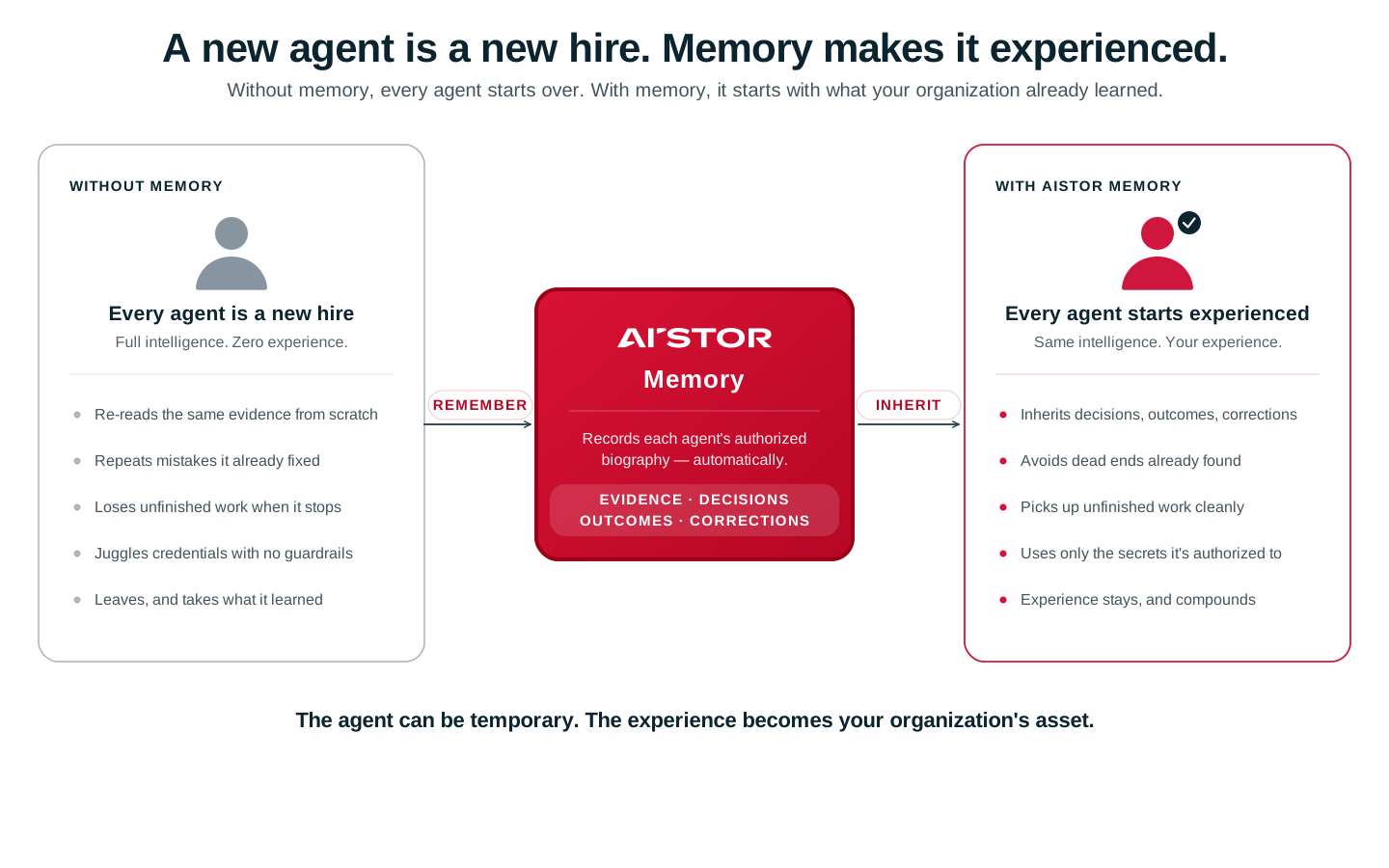
AI agents face the same divide. A modern model gives a fresh agent considerable capability, but every runtime arrives without a past unless previous work has been preserved and made available to it. The agent may not know which evidence proved reliable, why a decision was made, which correction a person supplied, or what remains unresolved. Without durable Memory, teams repeatedly reconstruct this context from transcripts, summaries, and source material, spending tokens, time, and money on knowledge they have already paid to create. Each restart also creates another opportunity to reopen a settled question, repeat a corrected mistake, or lose an important piece of judgment.
AIStor Memory gives agents continuity through a durable, customer-owned record of what prior work established, held in full rather than truncated or summarized. It preserves evidence references, decisions, outcomes, corrections, provenance, and unresolved work so that the relevant knowledge can be selected for an authorized agent according to task scope and customer policy. Memory does not change the underlying model or guarantee perfect recall. It allows a capable new agent to begin with the accumulated context that would otherwise exist only in the minds of experienced employees or disappear with the previous session.
Agent Biography is the authorized record of an agent's work, captured within Memory: what each run examined, decided, produced, and left unfinished. Workspace preserves active files and accepted handoffs, while Vault protects the credentials an approved agent needs to act. Together, the three services give agents durable knowledge, continuing work, and controlled authority, each kept distinct and each under customer control.
Here is how it fits together:
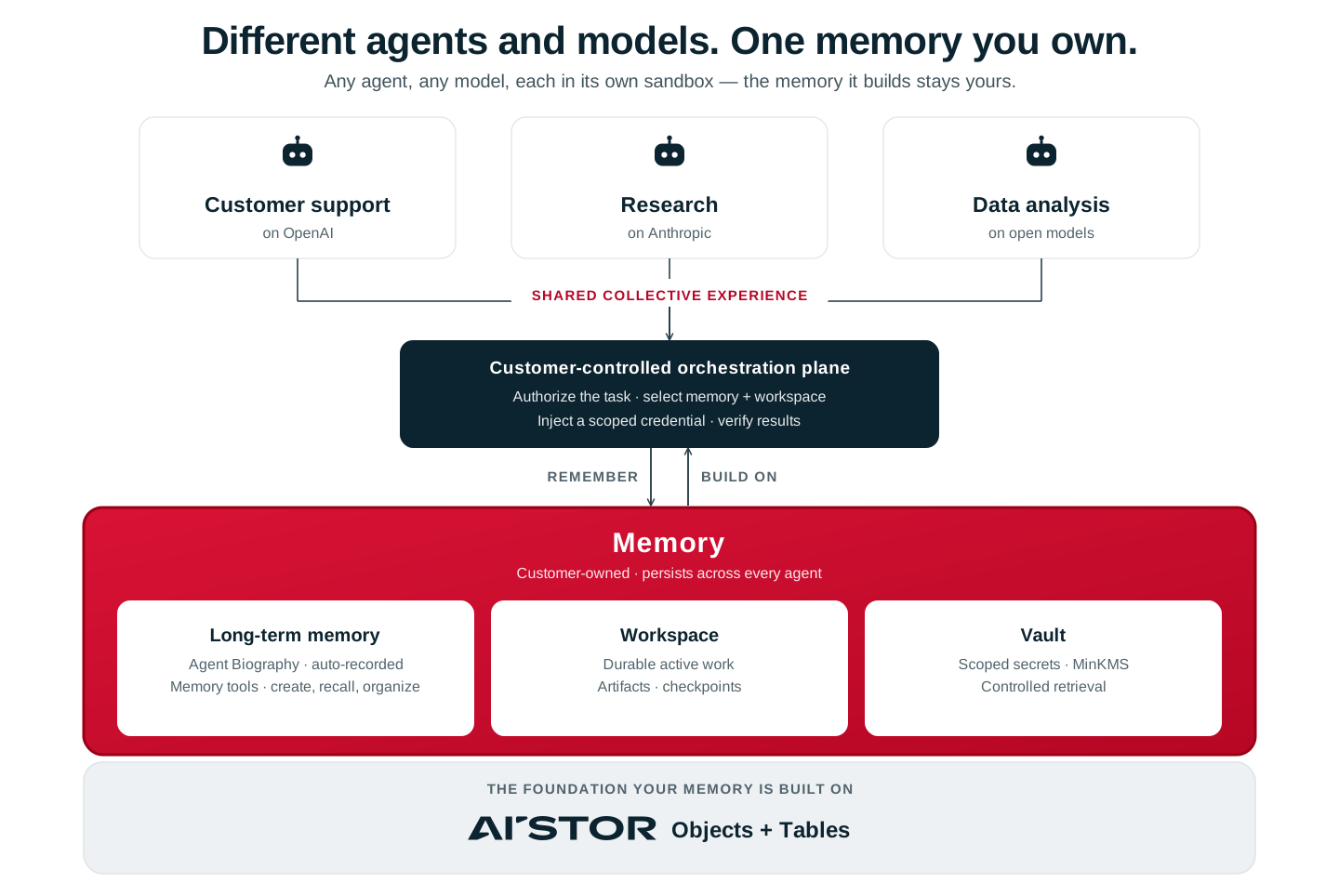
Long-term memory, workspace, and vault. One AIStor Memory product, built on AIStor, under your control.
Models, agents, and where they run will continue to change. The knowledge accumulated through agent work should remain independent of them. With AIStor Memory, customers retain that knowledge and can make it available to future authorized agents, allowing each new worker to benefit from the work that came before rather than starting from scratch.
A Context Window is Not Memory
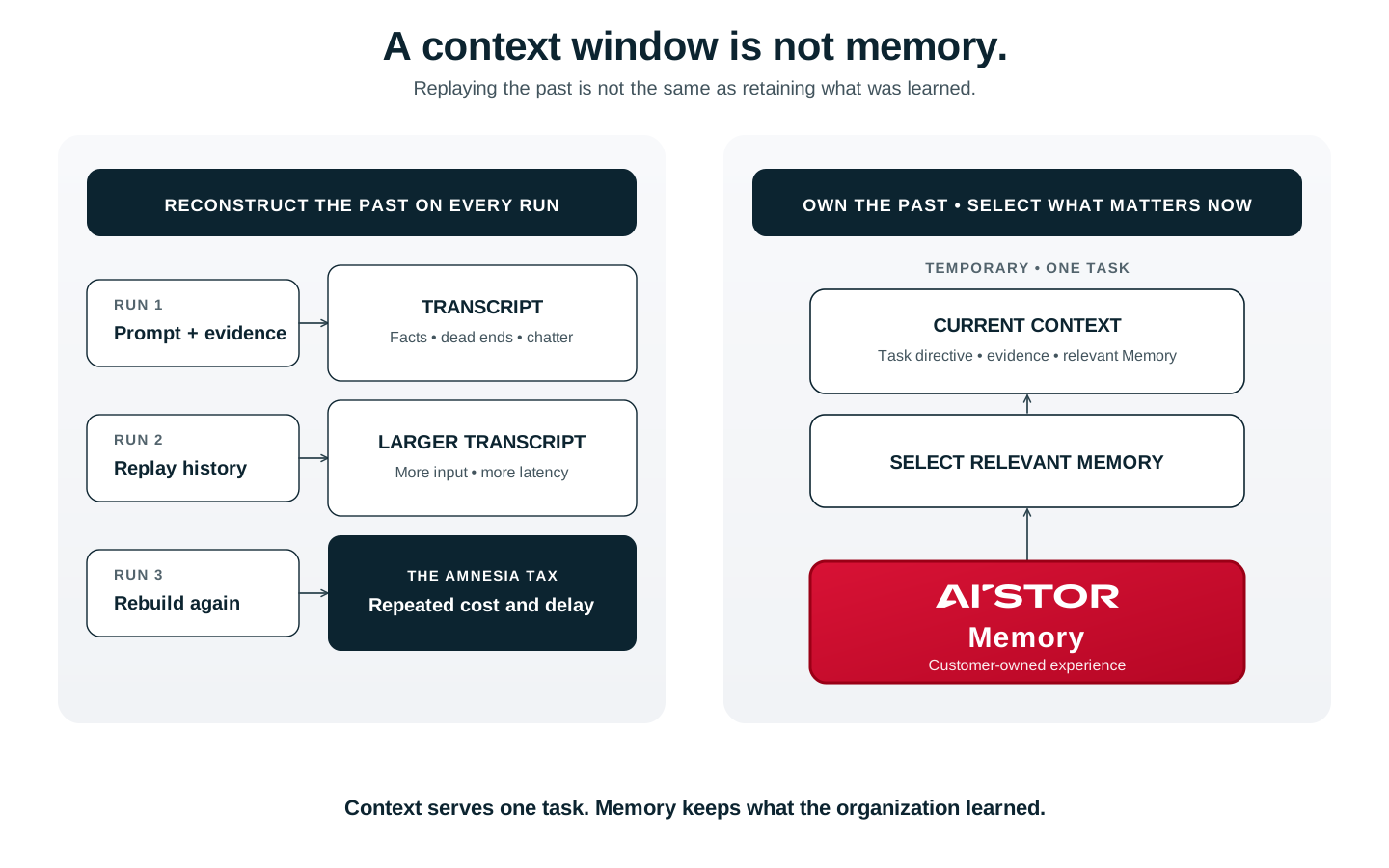
A context window and memory do different jobs. Context is the working set a model sees for the request in front of it. Memory is the durable record the organization keeps.
Context carries instructions, evidence, tool results, and selected history into a single inference. It is essential, but it is a temporary input. On its own, it never becomes a durable record of what the organization learned.
The common workaround is to rebuild the past for every new run: load another transcript, attach another summary, and send the same history through the model again.
That creates an amnesia tax, and you pay it three times:
- Cost: old history burns input tokens and budget again, instead of being distilled once into reusable knowledge.
- Time: larger inputs slow the next decision and every action that depends on it.
- Quality: relevant evidence competes with replayed conversation noise, and mistakes that were already corrected can be repeated instead of avoided.
Cost is only the first penalty. Even when an organization is willing to spend more and wait longer, the agent can still decide worse, because the evidence that matters is buried under everything replayed alongside it.
A larger context window does not remove this. Controlled experiments show that reasoning quality can decline as input length grows, even when the model retrieves the correct evidence (Context Length Alone Hurts LLM Performance Despite Perfect Retrieval, EMNLP 2025). Memory benchmarks now measure exactly what a growing transcript cannot preserve; retained workflows, changing state, and recurring failure modes an agent should stop repeating (LongMemEval-V2, 2026).
AIStor Memory retains durable knowledge so that the relevant part can be selected for the task at hand, rather than forcing the agent to reinterpret the entire past.
Memory is Sovereign Customer Data
The material an agent examines may be sensitive. What the agent concludes from it can be even more revealing.
Memory can hold the reason an incident was escalated, the judgment behind a claim decision, an operating exception, a strategy that failed, a customer commitment, or the open questions around a material event. It captures not only what happened, but what your organization concluded.
That is not disposable output from a model session. It is customer data.
With AIStor Memory, your organization controls that durable record, where it lives, who can use it, how it is curated, and when it is updated, retained, or deleted. You keep the source of truth, while task-relevant memory can be supplied to compatible agents wherever they run.
Sovereignty is not only about owning the model or the compute. It is about owning the institutional knowledge built around them and that knowledge lives in memory.
That sovereignty preserves your freedom of choice. You can change agents, models, and where they run without abandoning what your agents learned.
Everything an Agent Keeps is Memory
Anything an agent needs to persist is memory. It takes three forms within AIStor, not three separate storage systems. There is no separate database, vector store, or metadata tier to stand up. Long-term memory preserves what the organization has learned. Workspace preserves active work. Vault protects the credentials an approved agent needs to act. All three share the same AIStor foundation, but each is a distinct form of the agent's memory, with its own purpose, access boundary, and lifecycle
Long-term memory
Long-term memory preserves the knowledge that should shape future work; facts, decisions, evidence, what worked, what didn't, and open questions. It fills two ways, one automatic and one deliberate:
- Automatically, as Agent Biography. AIStor Memory keeps a faithful account of each agent's work as it unfolds, turning it into durable organizational memory. No memory engineering, and nothing to change in the agents your teams already run. Capture stays within the boundaries set by your access policy.
- Deliberately, through memory tools. Agents get purpose-built tools to create, recall, and organize what they keep, so an agent can reach for exactly the memory a task needs rather than only having its biography recorded.
Together, remembering what the organization learns stops being a specialist skill and becomes something that happens by default.
Workspace
Workspace carries active plans, attachments, intermediate artifacts, checked outputs, evidence indexes, and checkpoints work in progress, including what an agent hands off. Its durable state lives as customer-controlled AIStor objects, giving authorized agents a continuing working set across runs without treating every draft as accepted memory.
Vault
Vault holds the secrets and credentials an approved agent needs to act: API keys, tokens, and other sensitive material. Each secret is encrypted and stored in your own AIStor, with keys controlled by MinKMS, and kept separate from both memory and active work. An authorized task receives a narrowly scoped credential only when it needs one, so secret custody never mixes with accumulated knowledge or active work.
The distinction is simple, three forms of one memory:
- Long-term memory preserves what the organization has learned.
- Workspace preserves what an agent is actively working on.
- Vault preserves the authority an approved agent may receive.
Why Memory Belongs Beside the Data That Formed It
Useful memory is formed from evidence.
An operations agent learns from incident records, application events, policies, and human decisions. A service agent learns from correspondence, contracts, prior resolutions, and accepted commitments. A research agent learns from documents, observations, comparisons, and the conclusions people approved.
Source evidence resides in AIStor Objects. Structured records and events stay in AIStor Tables. Durable memory records and Workspace artifacts stay in that same governed AIStor environment. AIStor Memory preserves the meaning agents derive from those source Objects and Tables.
Memory is the meaning agents derive from data. Separating that meaning from its source weakens both. The conclusion loses the context that made it valid, and the evidence loses the record of how it was interpreted.
The industry mantra is that context is everything, everything an agent needs to do a task well. Memory is the part of that context worth keeping past the task. Keeping it beside the data preserves the link between a conclusion and the material that supports it: an agent can hold references and provenance instead of separating organizational knowledge from its source.
That relationship strengthens both sides. Evidence gains the record of how it was interpreted. Memory keeps the grounding needed to inspect, challenge, update, or retire what the organization previously learned.
Keep Memory Portable
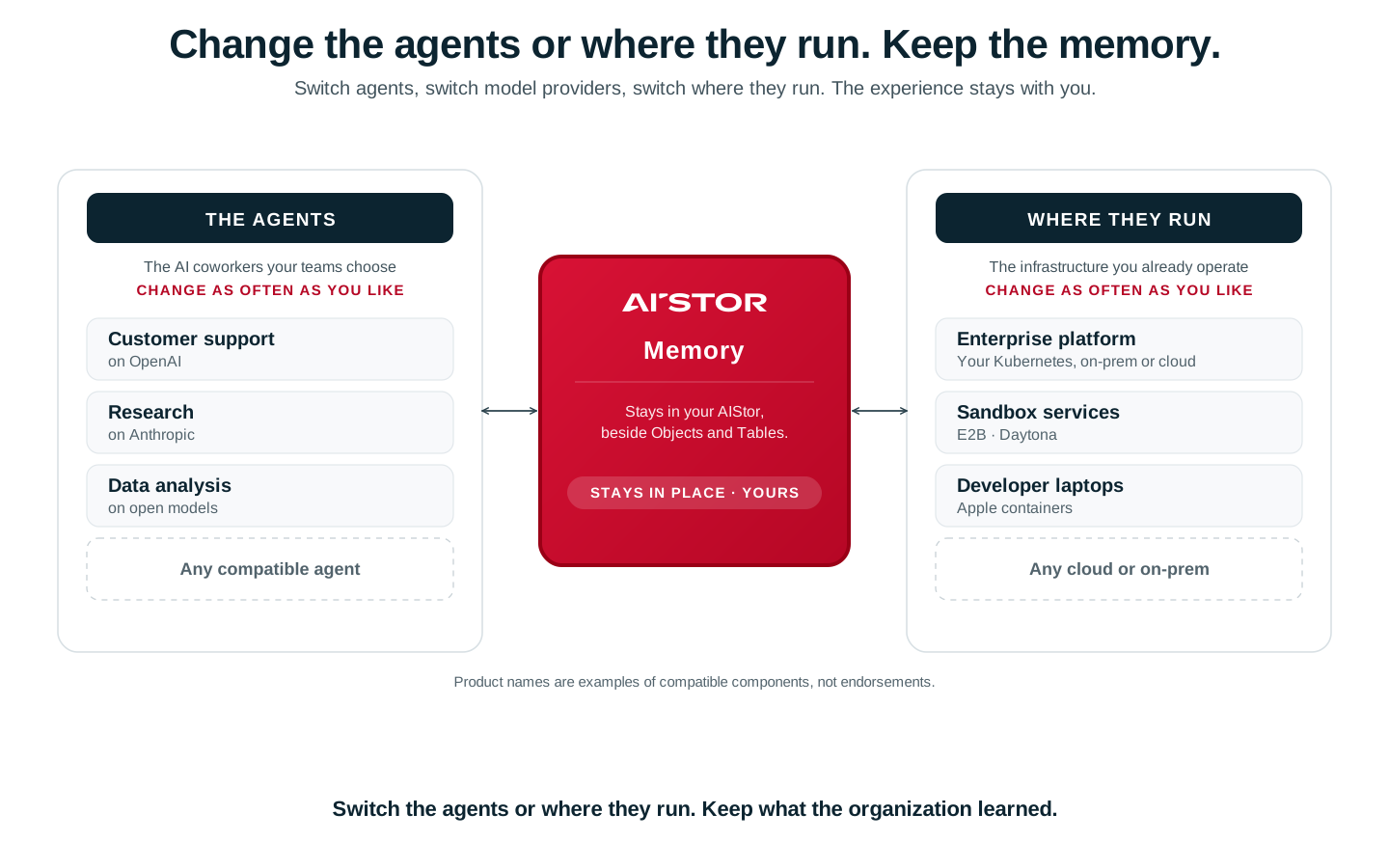
Your durable memory should never be trapped inside a single agent, model, or place where it happens to run. Two things around your memory change constantly, and your teams should be free to change them as often as they like:
- The agents your teams choose: The AI coworkers doing the work, from customer-support and research agents to data-analysis and coding agents, each running on whatever model or provider fits. Teams adopt an agent for the job at hand and can swap it as freely as any other tool, and the model it uses rides along with it.
- Where they run: The infrastructure your teams operate, from your enterprise Kubernetes platform to sandbox services such as Daytona, E2B, Github Codespaces, Modal, OpenSandbox, or Vercel to a developer's laptop.
Your teams can switch agents, switch model providers, or switch where they run, as often as they like. The experience those agents have earned stays in one place, in your infrastructure, and it belongs to you. Memory does not migrate from one stack to the next; it stays put while everything around it changes, incorporating each agent's authorized biography and returning the task-relevant knowledge your policy permits.
What Ownership Changes
An agent may start because a person asked for help, a schedule fired, an application changed, new data appeared, or another agent handed over a task. AIStor Memory does not dictate that trigger, agent, model, or where it runs. It gives those changing choices a stable, customer-controlled foundation.
- A new task can begin with selected knowledge instead of a rebuilt transcript.
- Agent Biography can preserve authorized decisions, outcomes, corrections, and provenance as part of Memory.
- Protected authority can stay separate from both the model and the memory it uses.
- Active work can continue between authorized agents without becoming session residue.
- Evidence and the meaning derived from it can share residency, identity, audit, and lifecycle boundaries.
- You can curate, update, retire, or delete memory as organizational knowledge changes.
- Agents, models, and runtimes can change without taking the organization back to its first day.
Own the Memory Your Agents Create
Agents will get better. Models will change. Context windows will grow. The agents you run, and the places you run them, will come and go.
The durable asset is what your organization learns through them: the evidence it trusted, the decisions it made, the corrections it accepted, the outcomes it observed, and the work it chose to carry forward.
AIStor Memory keeps that knowledge under your control. On the same AIStor foundation, Workspace preserves active work, and Vault protects the credentials agents need to act.
Enterprises ready to give their AI agents a memory that lasts can contact MinIO to learn more about deploying AIStor Memory in their environment.
.svg)



.avif)