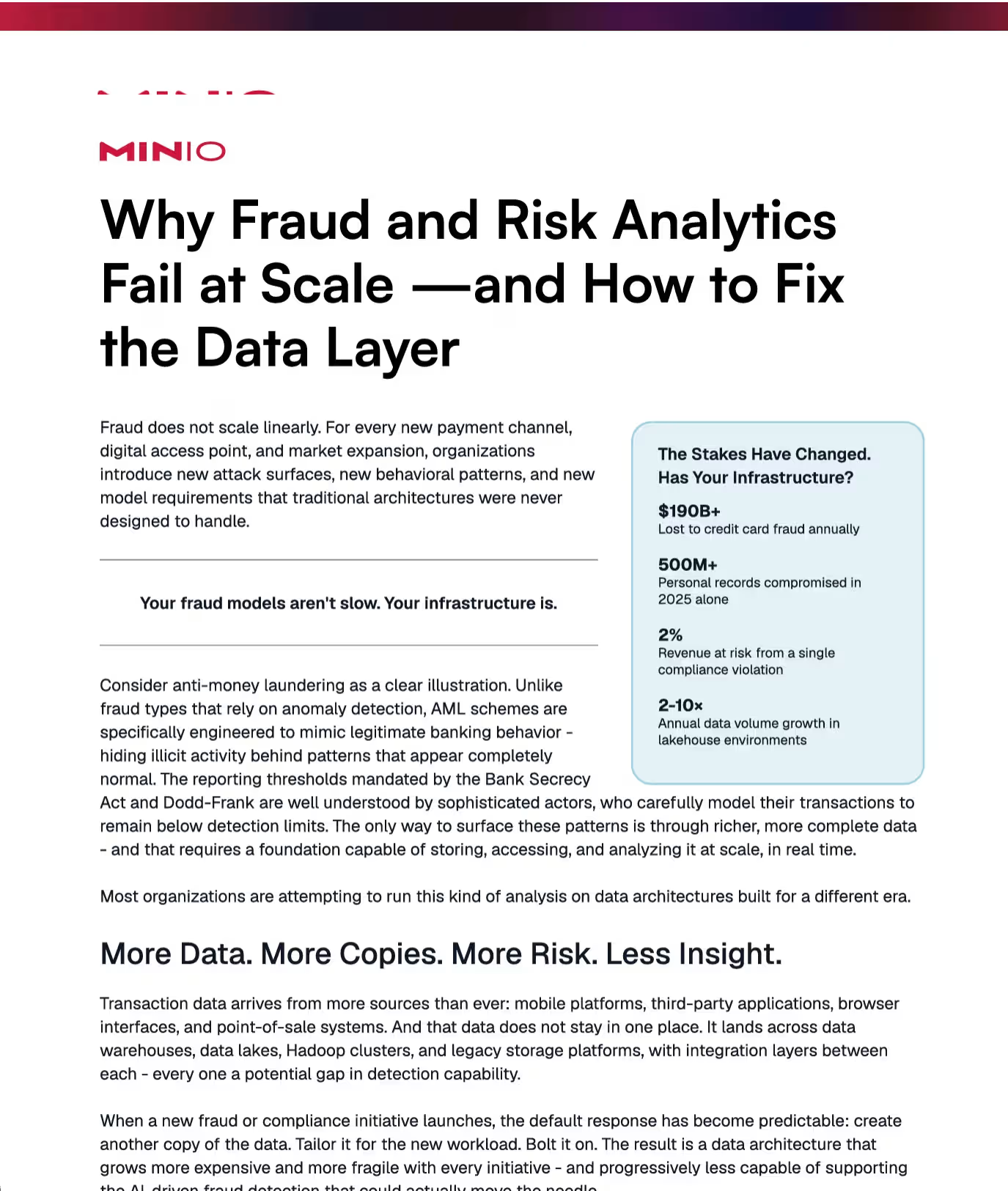
Transaction data now arrives from more sources, at higher velocity, than the architectures built to analyze it can handle. The result is fragmented infrastructure that grows more expensive and more brittle with every new initiative, while fraud and risk models underperform because they never operate against a complete, unified data set. This whitepaper diagnoses three specific failure modes: Hadoop's batch-first design and 3x replication overhead; the real-time versus historical tension that forces teams to choose between recency and depth; and bolt-on object storage that renders archived transaction data invisible to analytics workflows. The solution is a consolidated data foundation built on MinIO AIStor, serving fraud detection, AML, risk modeling, regulatory reporting, and cybersecurity threat detection from a single platform. Customer results include NPCI scaling to 1.5 PB with 6,000+ daily queries and Nomura recovering 4+ hours of SLA headroom with 50%+ TCO reduction.
Fraud and risk analytics fail not because of weak models, but because fragmented data architectures — Hadoop clusters, siloed copies, and bolt-on object storage — prevent analytics and AI from operating against unified, complete transaction data.
AIStor's native WORM-compliant immutable storage and active-active multi-site replication address SEC 17a-4, GDPR, and BSA compliance requirements without custom tooling or additional governance layers.
NPCI migrated from Hadoop/HDFS to AIStor and Trino, achieving 65% faster fraud model runtime and 5x query throughput while scaling to 1.5 PB with 6,000+ daily queries.
Financial services data and technology leaders — including fraud operations, risk analytics, and compliance engineering teams — responsible for scaling AI-driven detection while managing the cost and complexity of fragmented transaction data infrastructure.