Solution Brief

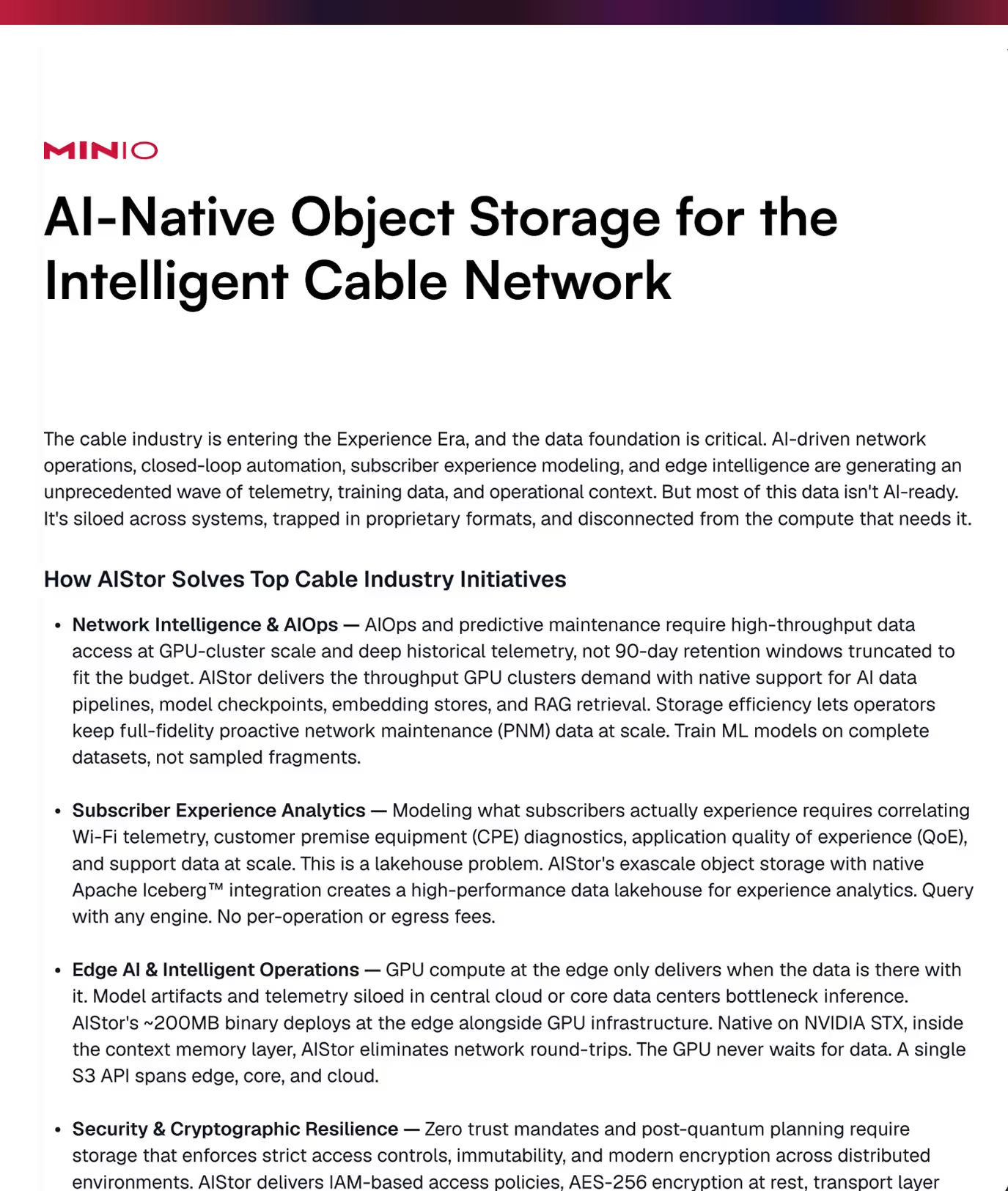
AI-Native Object Storage for the Intelligent Cable Network

About This Resource
Simple maroon user profile icon with circular head and curved shoulders.
Who This is For:

Cable network operators and MSO technology leaders responsible for AI-driven network operations, subscriber experience analytics, edge compute deployments, and zero-trust data security across distributed cable infrastructure.

Key Takeaways
Blue check mark inside a light blue circle.

AIStor's ~200MB binary deploys natively at the edge alongside GPU infrastructure on NVIDIA STX, eliminating network round-trips and ensuring the GPU never waits for data across edge, core, and cloud tiers via a single S3 API.

Blue check mark inside a light blue circle.

Native Apache Iceberg integration and Delta Sharing enable a high-performance cable data lakehouse queryable by any engine with no per-operation fees, no egress costs, and no proprietary database lock-in.

Blue check mark inside a light blue circle.

AIStor delivers IAM-based access policies, AES-256 encryption, WORM object locking, and comprehensive audit logging fully aligned to zero trust principles and post-quantum security planning requirements.

This solution brief maps AIStor capabilities to five cable-specific initiative areas: Network Intelligence and AIOps, Subscriber Experience Analytics, Edge AI, Security and Cryptographic Resilience, and Context-Aware Networks. For Network Intelligence and AIOps, AIStor provides the throughput GPU clusters require with native support for model checkpoints, embedding stores, and RAG retrieval, enabling ML models trained on complete PNM datasets rather than sampled fragments. For Subscriber Experience Analytics, AIStor's native Iceberg integration supports a high-performance data lakehouse correlating Wi-Fi telemetry, CPE diagnostics, QoE data, and support records at scale using any query engine. The brief covers edge deployment options enabled by AIStor's lightweight binary, native on NVIDIA STX; security controls spanning AES-256 encryption, TLS, and audit logging; and multi-tenancy architecture for multi-operator NaaS platforms. Performance benchmarks and TCO comparisons are included for operators evaluating infrastructure consolidation.

Related Resources