Data engineers, AI platform architects, analytics teams, and storage and infrastructure leads evaluating a unified on-premises platform for Iceberg-native table access, agentic AI workloads, and governed cloud sharing without separate catalog infrastructure or replication pipelines.
.svg)
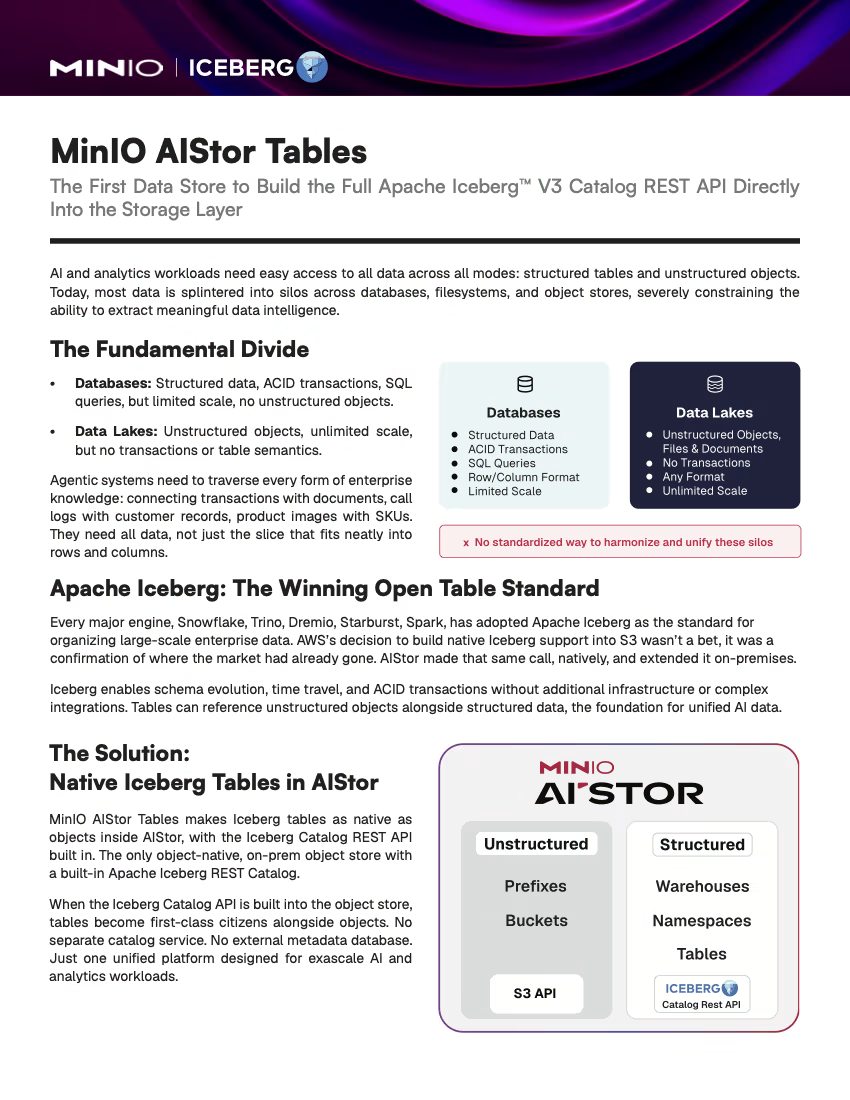
Agentic AI systems need to traverse every form of enterprise knowledge, connecting transactions with documents, call logs with customer records, and product images with SKUs. AIStor Tables makes structured tables first-class citizens alongside objects on the same platform, with no separate catalog service and no external metadata database.
AIStor Table Sharing gives Databricks live, read-only access to on-premises Iceberg and Delta tables the moment they land, with no pipeline, no replication job, and no separate sharing service, built on the OpenSharing protocol at the storage layer.
Every major engine including Snowflake, Trino, Dremio, Starburst, and Spark has adopted Apache Iceberg as the enterprise table standard. AWS confirmed the direction by building native Iceberg into S3. AIStor Tables makes the same call natively, on-premises, with time travel making every training run and report reproducible against the exact table state it used.




.svg)