Solution Brief

AIStor for Government

About This Resource
Simple maroon user profile icon with circular head and curved shoulders.
Who This is For:

Government IT architects, agency CIOs, and federal technology program managers evaluating scalable, cost-efficient, and sovereignty-compliant object storage for AI, analytics, and mission-critical workloads.

Key Takeaways
Blue check mark inside a light blue circle.

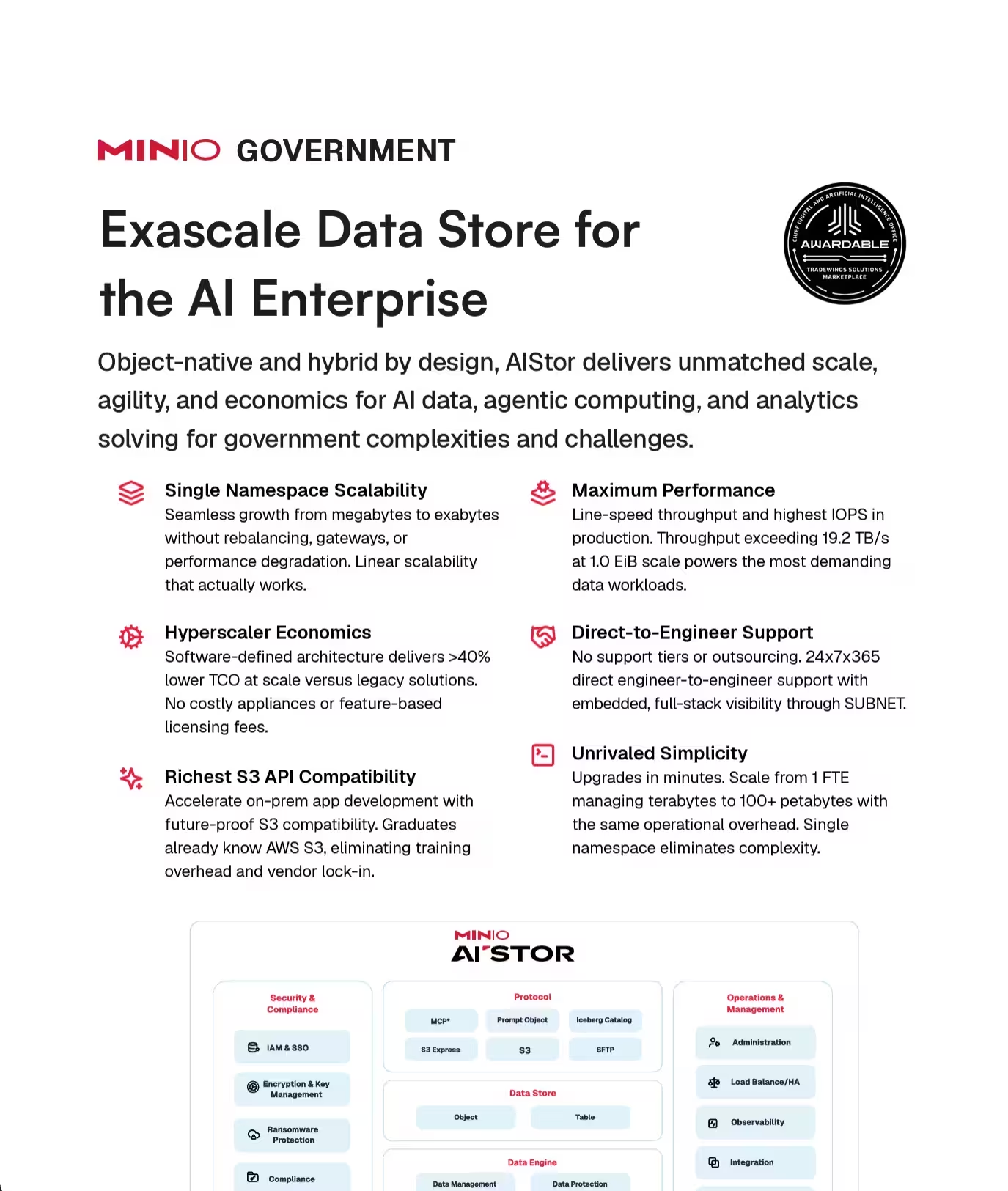
MinIO AIStor delivers seamless growth from megabytes to exabytes without rebalancing or performance degradation — meeting government demand for infrastructure that scales with mission requirements.

Blue check mark inside a light blue circle.

A software-defined architecture provides more than 40% lower TCO at scale versus legacy solutions, with no costly appliances or feature-based licensing fees to constrain government IT budgets.

Blue check mark inside a light blue circle.

AIStor's S3 API compatibility eliminates the specialized training overhead that legacy systems require, while throughput exceeding 19.2 TB/s at EiB scale powers the most demanding government AI workloads.

Government agencies operate under constraints that most enterprise storage platforms are not built for: sovereign data requirements, exascale AI and analytics workloads, tight budget accountability, and zero tolerance for vendor lock-in. This product brief covers how MinIO AIStor addresses each of these directly. It details seamless exabyte-scale growth without rebalancing or gateways, a software-defined architecture that delivers more than 40% lower TCO versus legacy solutions, and S3 API compatibility that eliminates the specialized training overhead that Hadoop and legacy storage platforms require. Throughput exceeding 19.2 TB/s at 1.0 EiB scale is benchmarked for the most demanding government AI and analytics workloads. AIStor's direct-to-engineer support model is also covered, an operationally important differentiator for agencies that cannot afford to navigate support tiers or outsourced vendor relationships when mission-critical workloads are at stake.

Related Resources